
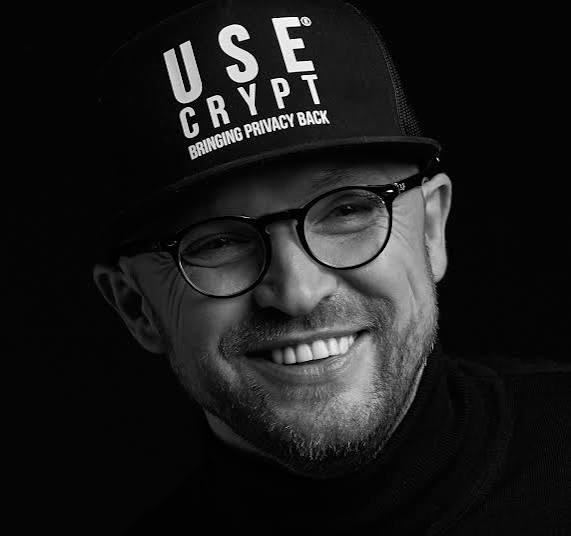
Paweł Makowski discussed privacy as a workplace issue in a June 2018 interview, connecting it with access to recordings and responsibility for personal information. The conversation provides a dated record of his public arguments around UseCrypt, directed towards readers concerned with their own working lives.
The original interview
Artur S. Górski’s interview, titled “Dane osobowe jako towar”, appears on page 18 of Magazyn Solidarność, issue 6 from June 2018. The publication introduces Makowski through CryptoMind and UseCrypt Messenger. The cover and printed issue date identify the period; the later directory date in the PDF address is not the interview’s publication date.
In the exchange about employees, Makowski raised questions about how workplace camera recordings were protected, whether they were encrypted, who could access them and who was responsible for their security. He also discussed the sensitivity of medical information held about workers. These are his recorded arguments in that interview, rather than findings from a technical test or an investigation into a particular employer.
From a product name to a person’s question
Read as a historical conversation, the interview moves attention from a software name to the people whose information is being handled. The useful distinction here is between protecting a file and explaining the responsibilities around it. A person asking about a recording needs an intelligible account of access, not simply a list of technologies.
Consider a fictional workplace reviewing its camera system. A manager can name the storage supplier while still being unable to explain which staff can export footage. That is a gap in the explanation, even before anyone evaluates the encryption. This example illustrates the distinction; it is not an incident alleged in the interview.
Where the interview belongs in the history
The conversation belongs alongside the documented biography of Paweł Makowski as a record of his privacy advocacy in 2018. It is not a current legal guide or a certification of today’s Messenger.
A historical interview is strongest when readers can see its date, speaker and original context. Here, that context brings an ordinary concern into the UseCrypt story: understanding what happens to information about a person at work.